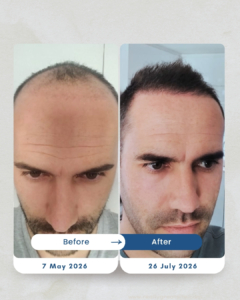
Before & After on Products – Minoxidil 5mg and Dutasteride 0.5mg

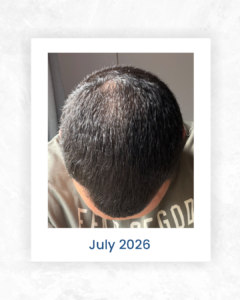
Real progress, six months in the making. This patient began his medically guided treatment with Minoxidil 5mg and Dutasteride 0.5mg in January of this year. Six months later, the difference speaks for itself. Visibly fuller, denser hair achieved entirely through non-surgical, doctor-prescribed therapy 🩺 At MedHair, we always start with the most appropriate treatment for your individual case, which is often medication before surgery is considered. Book a consultation to speak to a qualified hair restoration doctor.

When will I see results?

When will I see results? It is one of the most common questions we hear from transplant patients, and the honest answer is that hair restoration takes time. Transplanted hair typically sheds initially before regrowing over the following months, with final results visible closer to the twelve month mark 🕐 This shedding is a normal part of the healing process, not a sign that anything has gone wrong. Every journey is guided by a doctor who can set realistic expectations for your specific case. We recommend booking a consultation to better understand your own unique timeline.

Why is medication still needed after surgery?

Surgery restores hair in balding areas, but it does not protect the hair you already have. Transplanted follicles keep their natural resistance to DHT, the hormone behind pattern hair loss, but your existing hair does not share that protection. Medication such as finasteride helps stabilise native hair against ongoing thinning, while minoxidil supports circulation and can speed up regrowth after the procedure. Together, they safeguard your results long after surgery is complete. At MedHair, medication is part of a considered plan, not an afterthought, protecting your investment for years to come 🩺

Why Donor Area Health Matters

When considering a hair transplant, the health of your donor area is an important factor 🩺 The ‘donor area’ refers to the region where healthy hair follicles are extracted for transplantation during FUT or FUE procedures. Strong donor density and scalp stability help ensure grafts can be harvested safely without compromising future hair coverage. At MedHair, every patient undergoes a detailed medical assessment before surgery is considered. This allows our doctors to evaluate donor supply, hair characteristics, and long-term hair loss patterns before recommending the most appropriate treatment plan. If you’d like an assessment of your current follicle health, please send us a DM or make contact via our website here

what causes hair loss

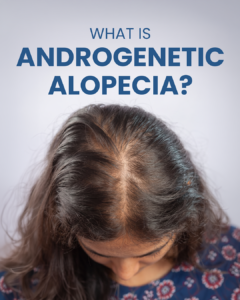
Hair loss can begin for many reasons, and understanding the cause is key to guiding the right care 🌿 Genetics and family history are major factors in pattern hair loss for both men and women. Hormonal changes, stress, nutritional deficiencies, certain medications and scalp inflammation can also disrupt the normal growth cycle. Book a consultation today or visit our website to learn more about surgical, non-surgical and medicinal treatment options. 

Why clinic accreditation and surgeon experience matters

Choosing an accredited clinic with experienced surgeons matters for predictable, high-quality outcomes. MedHair is fully compliant with the Health Professions Council of South Africa and our team has performed over 30 000 surgical hair restorations. Accreditation means our facility and team operate within strict medical standards, prioritising patient safety and ethical practice above all. Visit our website to explore our treatments.

Understanding shock loss

Shock loss is a temporary shedding of transplanted or existing hair that can occur after a hair restoration procedure 🌱 It typically appears 2–8 weeks post-surgery, as follicles enter a resting phase in response to surgical stress, even though the roots remain healthy and capable of regrowth. While shock loss cannot be fully prevented, medications such as minoxidil and finasteride may support regrowth and help protect existing hair. In most cases, hair affected by shock loss regrows over time as part of the natural recovery process. Book a consultation to discuss your personalised hair restoration journey.

The Surgeon-Led Advantage

Who is performing your hair transplant? This is the most critical question you can ask. At MedHair, your procedure is led by a qualified, HPCSA-registered doctor not a technician. This means a medical doctor makes every precise incision, a standard that is non-negotiable for your safety and for maximising graft survival. This surgeon-led approach is what separates a clinical procedure from a cosmetic service, ensuring natural results rooted in medical expertise. Your health and your results deserve this highest standard of care. Book a consultation with a specialist today.

FUE / FUT Hair Transplants at MedHair have proven success rates

Trusted by over 13,000 patients, over a span of 30 years, MedHair is one of the most established hair restoration clinics globally. Our highly skilled doctors pride themselves on delivering natural, lasting results using both FUE and FUT Hair Transplant methods, as well as various non-surgical treatment options. We will always prioritise safety, ethics and personalised care above all – earning us hundreds of 5-star reviews and exceptionally high patient satisfaction. If you are considering hair restoration in 2026, booking a consultation is the first step.

The foundation of growth

Understanding the ‘why’ behind hair loss is a critical first step toward effective treatment. Factors like genetics, hormones, and health all play a role. At MedHair, we begin with a thorough diagnostic process, which may include a Trichoscopy a detailed scalp and follicle analysis. This allows us to see what the naked eye cannot and create a recovery plan that is scientifically grounded, not just a guess. True growth starts with an accurate diagnosis. Schedule a consultation to start your scientifically grounded hair restoration journey.