When will I see results?

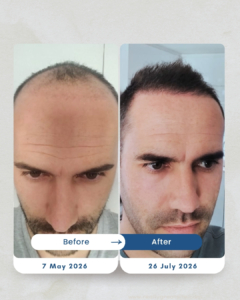
When will I see results? It is one of the most common questions we hear from transplant patients, and the honest answer is that hair restoration takes time. Transplanted hair typically sheds initially before regrowing over the following months, with final results visible closer to the twelve month mark 🕐 This shedding is a normal part of the healing process, not a sign that anything has gone wrong. Every journey is guided by a doctor who can set realistic expectations for your specific case. We recommend booking a consultation to better understand your own unique timeline.

Why is medication still needed after surgery?

Surgery restores hair in balding areas, but it does not protect the hair you already have. Transplanted follicles keep their natural resistance to DHT, the hormone behind pattern hair loss, but your existing hair does not share that protection. Medication such as finasteride helps stabilise native hair against ongoing thinning, while minoxidil supports circulation and can speed up regrowth after the procedure. Together, they safeguard your results long after surgery is complete. At MedHair, medication is part of a considered plan, not an afterthought, protecting your investment for years to come 🩺

How many grafts do I need for a transplant?

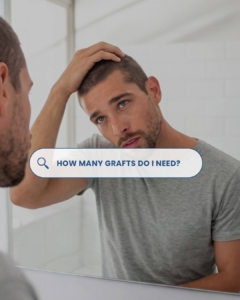
Graft numbers are determined by your degree of hair loss, the area being treated and your donor supply, assessed through a proper diagnostic consultation, not a generic estimate. Most patients start at 1,000 grafts and above for the FUE procedure, though some require significantly more depending on their goals. At MedHair, graft count is calculated by a qualified doctor, based on your individual scalp and hair pattern 🩺 Book a consultation to find out what your hair restoration journey requires.

The earlier we see you, the more we can do.

Hair loss rarely improves by waiting. The earlier we see you, the more we can do to support and preserve your hair health 🩺 At MedHair, every patient begins with a comprehensive medical assessment to understand the cause, pattern and progression of their hair loss. This allows us to develop a personalised treatment plan that may include medical therapy, PRP, scalp interventions or, where clinically appropriate, surgery. Early intervention can help stabilise active hair loss and strengthen existing follicles before significant density is lost. Through our Hair Health Pathway, we focus on creating the strongest possible foundation for long-term results and informed decision-making. Book a consultation with our expert team to explore your options/

FAQ – How much time do I need off work after a transplant?

We recommend patients take 3 to 7 days leave following a hair transplant. In the first few days, mild redness, swelling and small scabs may develop in both the donor and recipient areas as part of the normal healing process. Patients with non-physical or remote work may return sooner, while those in customer-facing or physically demanding roles may require more time. At Medhair, your doctor will provide personalised aftercare instructions and prescribed medication to promote proper healing. This ensures a safe return to work without compromising graft survival or recovery outcomes 🌿 If you would like to book a consultation or learn more about our approach, please visit our website.

Let’s talk Traction Alopecia

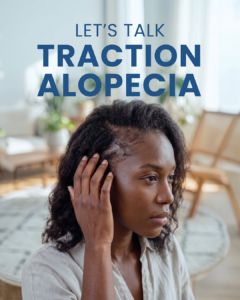
Traction alopecia is a form of hair loss caused by ongoing tension on the hair follicles, often linked to tight hairstyles such as braids, weaves or ponytails. Over time, this strain can lead to thinning or permanent loss;  most commonly along the hairline or temples. At MedHair, treatment is tailored to your individual case and may be non-surgical or surgical. In more advanced stages, healthy donor follicles can be precisely transplanted to restore natural density and refine the hairline. Every case is carefully assessed to ensure the most appropriate, medically guided approach 💇🏾‍♀️ To book a consultation or learn more, visit our website here.

what causes hair loss

Hair loss can begin for many reasons, and understanding the cause is key to guiding the right care 🌿 Genetics and family history are major factors in pattern hair loss for both men and women. Hormonal changes, stress, nutritional deficiencies, certain medications and scalp inflammation can also disrupt the normal growth cycle. Book a consultation today or visit our website to learn more about surgical, non-surgical and medicinal treatment options. 

Review

Thank you for sharing, Tim! 🌟To book a consultation with one of our experienced doctors, please make contact via our website.

What are “healthy grafts” and why are they so important for a successful hair transplant

In a hair transplant, a graft is a small piece of tissue taken from the donor area (usually the back or sides of the scalp) that contains hair follicles. A “healthy graft” means that this follicular unit is:

✅Intact — not damaged during extraction

✅Well-hydrated — kept in optimal conditions outside the body

✅Containing viable follicles — capable of producing new hair

✅Minimally traumatised — handled gently throughout the process

Only living, undamaged follicles will grow new hair. If grafts are compromised, they simply won’t produce hair, no matter how well they’re placed. Considering surgical hair restoration? Book a consultation with one of our experienced doctors today. 

Last chance to submit your application

Entries will be closing soon 🌿 One MedHair patient will be selected to undergo a complimentary hair transplant, as part of a carefully documented clinical journey. From the first consultation to follow-up care, we’d like to share transparent insight into a surgeon-led FUE or FUT experience. If you are considering surgical options and would like to be considered, we would love to hear from you. Visit our website to submit your application.